More than 2 travelers? Ask for a group proposal.
The section of the Camino del Norte from Santander to Ribadesella offers one of the most scenic stretches of Spain’s northern coastal route. It winds through lush green landscapes, rugged cliffs, fishing villages, and sandy beaches along the Cantabrian coast. The terrain features a mix of coastal paths, country lanes, and occasional steep climbs, providing both beauty and challenge.
As the route enters Asturias, the scenery becomes even more dramatic, with rolling hills and mountain backdrops meeting the sea. This segment is less crowded than other Camino routes, offering a peaceful and authentic pilgrimage experience with plenty of opportunities to enjoy regional cuisine, such as fresh seafood and Asturian cider.
Photo of Francisco Fernández on Pexels
This is the starting day of our route. Santander is a city offering a mix of natural beauty, cultural landmarks, and historical sites. One of the city's highlights is the Palacio de la Magdalena, a beautiful palace set on the scenic Peninsula de la Magdalena. Originally the royal summer residence, it is now a cultural center and offers stunning views of the bay and the surrounding beaches. The Magdalena Beach is also nearby, perfect for a relaxing stroll or a swim in the crystal-clear waters.
Another must-visit spot is the Centro Botín, a modern art center located right on the waterfront. The building itself is an architectural marvel, designed by the famous Renzo Piano. Inside, we will find exhibitions ranging from contemporary art to photography, along with fantastic views of the city and the sea.
In the heart of the city, the Catedral de Santander is worth a visit. This Romanesque-Gothic cathedral is a reminder of the city's historical importance and a peaceful place to reflect. Close by, we will also find the Museo de Prehistoria y Arqueología, which provides a fascinating glimpse into the region’s ancient past.
Finally, for those making the Camino, Santander’s port is an essential point. The bustling harbor area also has plenty of restaurants where we can enjoy fresh seafood before heading out on our next leg.
The stretch from Santander to Arce is a short but charming part of the pilgrimage along the Cantabrian coast. Leaving Santander, we enjoy views of the bay and beaches like Playa de El Sardinero before heading through coastal villages and green countryside. Highlights along the way include the Pas River and the tranquil natural surroundings of the Pas estuary, where wetlands and birdlife create a peaceful atmosphere.
Gastronomy in this area reflects the rich coastal and rural traditions of Cantabria. We can enjoy fresh seafood dishes, such as anchovies from Santoña or grilled sardines, as well as cocido montañés, a hearty local stew made with beans and greens. For dessert, quesada pasiega and sobaos pasiegos, traditional pastries from the nearby Pas valleys, offer a delicious taste of the region’s identity before arriving in the quiet village of Arce, a pleasant resting point surrounded by natural beauty.
The path from Arce to Santillana del Mar passes through some of Cantabria’s most picturesque coastal and rural landscapes. The route offers beautiful views of the Cantabrian Sea and the Saja-Besaya estuary. The walk alternates between coastal cliffs, meadows, and forest paths, providing a mix of seaside freshness and countryside calm.
Arriving in Santillana del Mar, often called “the town of three lies” (since it is neither saintly, flat, nor by the sea), we are rewarded with cobblestone streets, medieval architecture, and the famous Collegiate Church of Santa Juliana, one of the jewels of Romanesque art in northern Spain.
The stage from Santillana del Mar to Comillas combines cultural heritage with stunning rural and coastal scenery. Leaving the medieval charm of Santillana del Mar, the path passes through quiet farmland, rolling hills, and traditional Cantabrian villages like Oreña and Cóbreces, where we can visit the Cistercian Abbey of Santa María de Viaceli. As the route approaches the coast, dramatic views of the Cantabrian Sea return, with cliffs and meadows framing the landscape before reaching the artistic and elegant town of Comillas.
Comillas is a highlight of the Camino, known for its Modernist architecture, including El Capricho de Gaudí, the Pontifical University, and the Palacio de Sobrellano. Food along this stretch reflects both land and sea: grilled fish, octopus, and shellfish are common. Local cheeses and orujos (herbal liqueurs) are also typical. The day ends perfectly in Comillas, where history, architecture, and cuisine come together in a uniquely Cantabrian atmosphere.
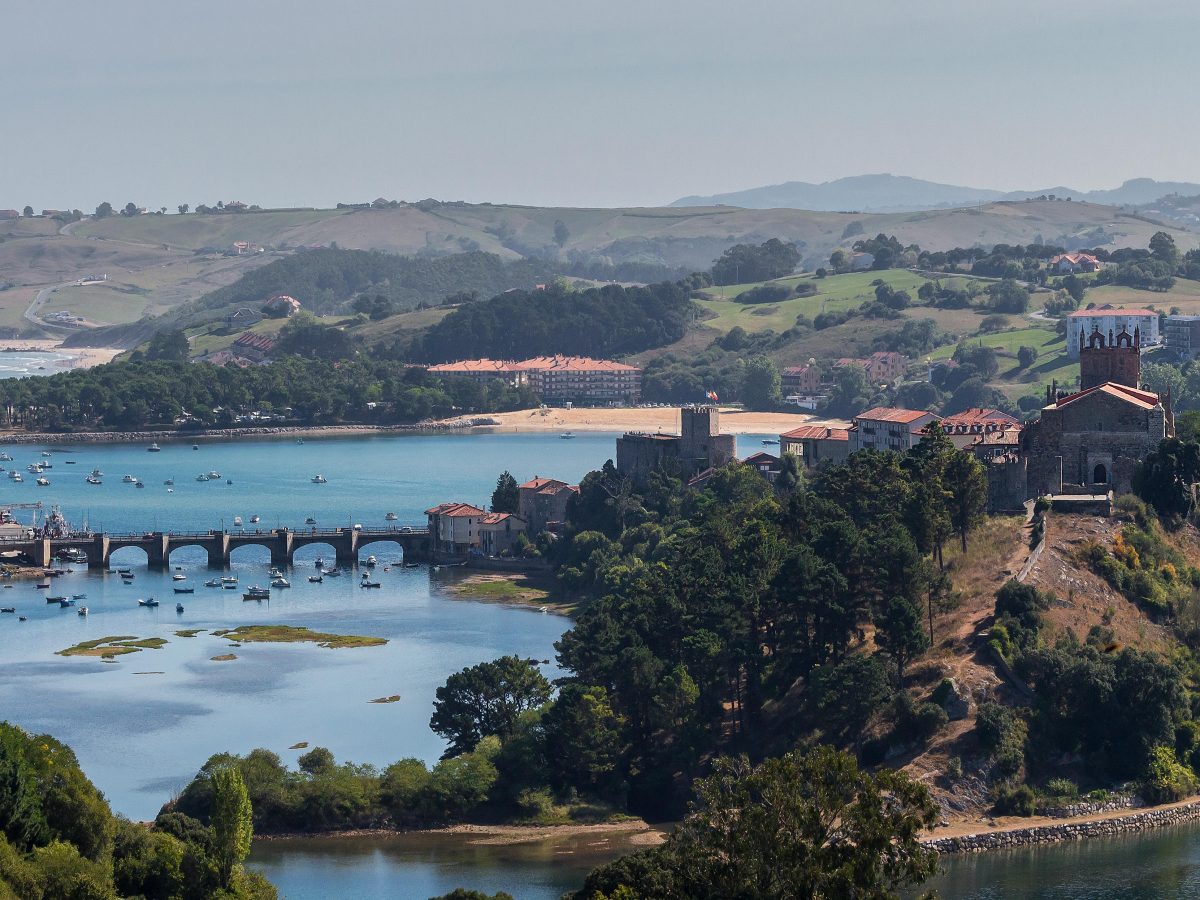
Leaving Comillas, the path passes through rolling farmland and coastal scenery before reaching San Vicente de la Barquera, a highlight of the route. This historic fishing town charms us with its medieval bridge, castle, and views of the Picos de Europa. The walk continues through peaceful countryside and small villages like Pesués, where the sound of the sea and the rhythm of rural life accompany the journey. The terrain alternates between gentle hills, meadows, and stretches near the coastline, offering a perfect balance of nature and heritage.
The stage ends in Unquera, a small town set at the mouth of the Deva River, which marks the border between Cantabria and Asturias. This section of the Camino is remembered for its harmony of coastal and inland beauty, blending sea breezes, green valleys, and traditional architecture in one of the most picturesque parts of northern Spain.
The stage from Unquera to Llanes marks the transition from Cantabria into Asturias. Shortly after leaving Unquera, we cross the Deva River, which forms the natural border between the two regions, and soon enter the charming Asturian village of Colombres, known for its elegant Indianos mansions built by emigrants returning from the Americas. From there, the path continues through green countryside and small hamlets, offering impressive views of both the Cantabrian coast and the distant Picos de Europa mountains.
The final approach to Llanes passes through pastoral fields before reaching this lively seaside town, famous for its medieval center, harbor, and artistic “Cubes of Memory” along the breakwater. This stage beautifully captures the essence of the northern coast — a blend of sea, mountains, and traditional villages.
The stage from Llanes to Ribadesella is one of the most breathtaking stretches of the northern route along the Asturian coast. Leaving the charming town of Llanes, the path passes through a series of beaches and cliffs, each offering stunning views of the Cantabrian Sea. The trail meanders through green meadows and small fishing villages, with constant glimpses of both the coastline and the Picos de Europa mountains in the distance.
As we continue westward, highlights include the Bufones de Pría, natural blowholes that shoot seawater high into the air when the tide and wind are right, and the picturesque village of Nueva de Llanes. The route features a mix of coastal paths, rural lanes, and quiet country roads, providing a peaceful rhythm before reaching Ribadesella. This elegant seaside town, set at the mouth of the Sella River, welcomes us with its blend of natural beauty and history, including the Tito Bustillo Cave, famous for its prehistoric art.
Ribadesella is a picturesque coastal town located at the mouth of the Sella River where it meets the Cantabrian Sea. The town’s historic center features charming cobblestone streets, colorful buildings, and notable landmarks such as the Church of Santa María Magdalena and the Palacio de los Prieto-Cutre, reflecting its rich architectural heritage. The river promenade offers scenic views of boats and the estuary, while the nearby Playa de Santa Marina provides a wide sandy beach ideal for walks and relaxation.
Nature and history blend seamlessly in Ribadesella. Just outside town, the famous Tito Bustillo Cave displays prehistoric rock art, and the surrounding cliffs feature dramatic coastal landscapes with blowholes known as bufones, where seawater shoots up through the rocks. The town is also famous for cultural events like the Descenso del Sella, an annual canoe race, making it a lively destination that combines natural beauty, history, and local traditions.
The “from” price is for one traveler. When travelers share a room, the booking total is adjusted automatically.
| Travelers | Adjustment to booking total |
|---|---|
| 2 travelers sharing | −676,00€ from the booking total |


