More than 2 travelers? Ask for a group proposal.
The Camino Inglés from A Coruña is one of the routes to Santiago de Compostela, traditionally taken by pilgrims arriving by sea from northern Europe.
Throughout the journey, we walk through a variety of environments, including coastal areas, lush forests, charming villages, and rolling farmlands. The route is marked by quiet roads and paths, with occasional glimpses of the Atlantic coast.
The path follows a well-preserved tradition of Christian pilgrimage, with numerous small towns and historic landmarks along the way. We can expect to find churches, chapels, and local hospitality, offering moments of rest and reflection.
A Coruña is the starting point of our Camino. This big city, located in the northwest of Galicia, offers a mix of rich history, beautiful landscapes, and vibrant culture. If we have enough time to explore this fascinating city, here are some of the key attractions:
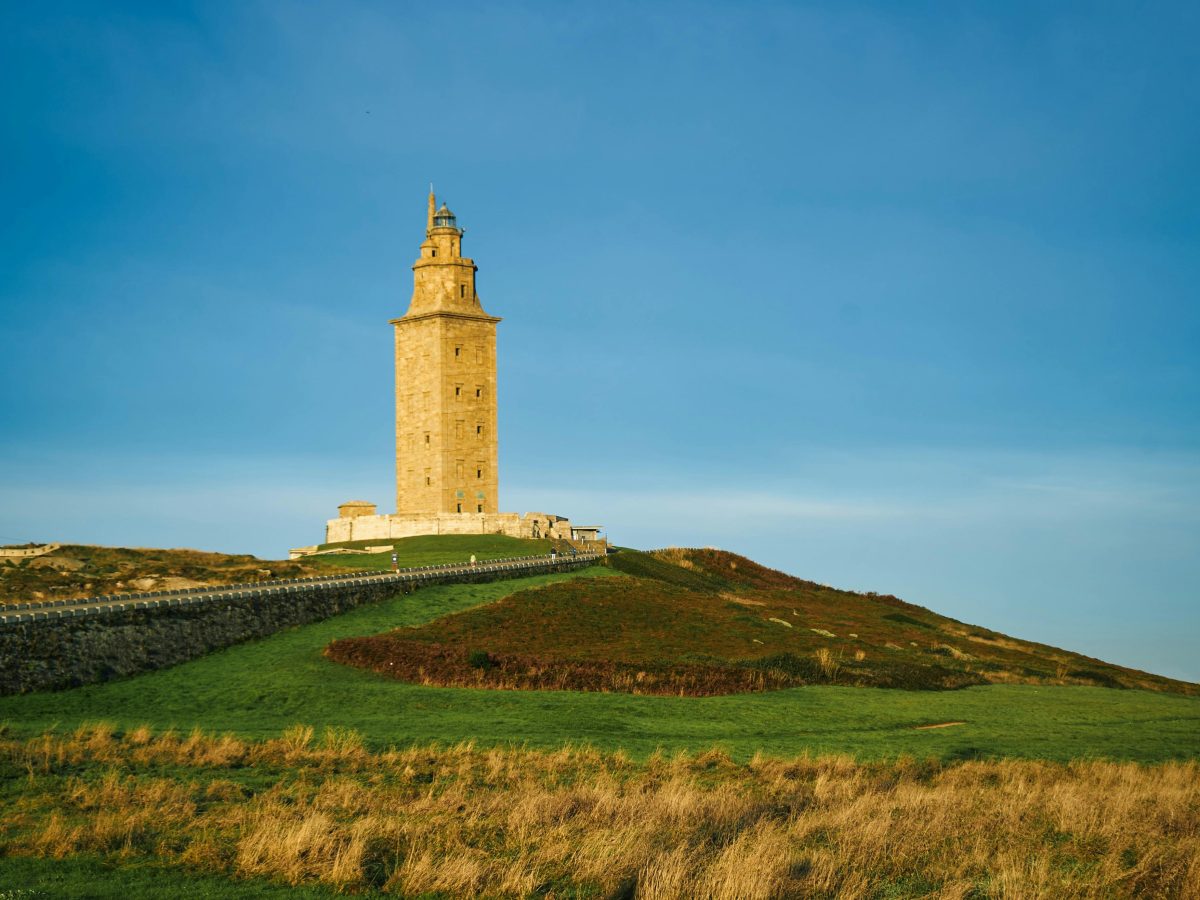
The iconic Tower of Hercules, a UNESCO World Heritage site, is one of the oldest working lighthouses in the world. Standing tall at nearly 60 meters, it offers stunning views of the Atlantic Ocean and the coastline. We can also explore the archaeological site around the tower and learn about its long history, dating back to Roman times.
Wandering through the Old Town of A Coruña is like stepping back in time. The cobbled streets are lined with picturesque buildings, old squares, and hidden courtyards. We can explore landmarks such as the Plaza Mayor, Plaza de las Bárbaras, and the Church of Santiago, all offering a glimpse into the city’s medieval past.
A Coruña boasts a variety of beautiful beaches, ideal for a day of relaxation or water sports. Orzán Beach and Riazor Beach are located near the city center and are perfect for a walk or even a swim.
A Coruña is known for its extensive seafront promenade, the Paseo Marítimo, which stretches along the coast for several kilometers. Walking or cycling along this path, we will be able to enjoy scenic views of the ocean, modern sculptures, and the vibrant atmosphere of the city.
The San Carlos Garden is a lovely green space with a peaceful atmosphere, ideal for a leisurely stroll or a picnic. Adjacent to the garden is the Castle of San Antón, a small fortress that once protected the city. Today, the castle houses an archaeological museum and offers sweeping views of the harbor and the coastline.
A Coruña is known for its fantastic seafood, particularly pulpo a la gallega (octopus with paprika). Visit one of the city's many traditional tapas bars or seafood restaurants to enjoy fresh fish, shellfish, and local specialties.
The section between A Coruña and Sarandóns takes us through a series of picturesque towns and rural landscapes. As we continue southwards, the route follows mostly paved roads and small trails through forests and farmland, with occasional stops at quaint villages. One of the key highlights of this stretch is the quiet and serene atmosphere, making it ideal for those seeking a reflective and peaceful journey.
In Sarandóns, we will find a typical Galician village that marks the end of this particular stage. Sarandóns, while small, offers a glimpse into rural Galician life, with stone houses and cobbled streets that retain the charm of the region’s traditional architecture. It is worth a special visit to the Church of Santa María de Sarandóns, a Baroque-style building from the 18th century.
Galician cuisine is renowned for its fresh seafood, and Sarandóns is no exception. Being close to the coast, the region offers an abundance of fish and shellfish dishes. Local restaurants serve traditional Galician delicacies such as pulpo a la gallega (octopus seasoned with paprika), empanada gallega (a savory pastry filled with fish or meat), and caldo gallego (a hearty soup).
The area is ideal for rest before continuing further along the Camino Inglés towards the final destination, Santiago de Compostela.
The route from Sarandóns to Ordes passes through peaceful rural areas, allowing us to connect with nature as we make our way to the next major town.
As we leave Sarandóns behind, the Camino Inglés winds through small villages, quiet farms, and forests. The path is relatively easy to follow, with clear way marks guiding us along quiet country roads and forest trails. The terrain is hilly but not overly challenging, with gentle ascents and descents. Along the way, we are often treated to panoramic views of the rolling hills and valleys that make up the rural heart of Galicia.
There are several small settlements and hamlets where we can stop for a rest, a meal, or to admire the traditional Galician stone houses. These villages are known for their warm hospitality, and local cafés often offer hearty Galician fare, including tarta de Santiago (a traditional almond cake) and fresh empanada gallega (Galician savory pie).
The town of Ordes marks an important milestone on the Camino Inglés, sitting roughly halfway between Betanzos and Santiago de Compostela. Ordes is a larger town compared to the smaller villages along the route, offering more facilities and places to eat. The town is also home to a charming historic center with traditional Galician architecture, including the Church of Santa María, a beautiful example of Galician religious architecture. The church, which dates back to the 13th century, is located in the town center and features a mix of Romanesque and Gothic elements.
Ordes has a charming historic center where we can explore narrow streets lined with traditional stone houses, local shops, and cafés. It is an excellent place to soak in the local atmosphere and experience the relaxed pace of life in this rural Galician town.
The stretch of the Camino Inglés from Ordes to Sigüeiro takes us through scenic rural Galicia, offering a peaceful journey through forests, small villages, and picturesque landscapes.
The journey begins as we leave Ordes, a town that has already offered a taste of Galician history and culture. Heading out of Ordes, the Camino Inglés follows rural paths and quiet roads that gradually lead us through the natural beauty of Galicia. The route from Ordes is marked by dense green forests, quiet farmland, and rolling hills—typical of the region's lush landscape.
The route is mostly flat, but there are a few gentle inclines that provide panoramic views of the surrounding countryside. This part of the Camino Inglés is not particularly challenging in terms of terrain, but it offers plenty of opportunities for us to reflect, take in the natural beauty, and enjoy the serenity of the region.
As we near Sigüeiro, the Camino Inglés begins to lead us closer to the outskirts of the Santiago de Compostela metropolitan area. Sigüeiro is a small town located in the municipality of Ames, just a short distance from Santiago. It is a quiet and welcoming place, offering us a chance to rest before the final stretch of the Camino.
The town of Sigüeiro has a relaxed atmosphere, and it is a good place to stop, reflect on our journey, and enjoy some local refreshments before heading towards Santiago de Compostela. There are several small shops, bars, and places to stay in Sigüeiro, and the town is known for its peaceful charm, making it a perfect stop for pilgrims who want to enjoy the calm before reaching the bustling city of Santiago.
As part of the Camino Inglés, the town is a popular stopping point for those walking the Camino, and it serves as a transition between the countryside and the city of Santiago de Compostela. We will find friendly hosts and the typical Galician warmth, making it a memorable stop on our pilgrimage.
The final stretch of the Camino Inglés from Sigüeiro to Santiago de Compostela is a short but exciting part of the pilgrimage, as it marks the approach to the city that has been the destination for pilgrims from all over the world for centuries. This section of the Camino is filled with anticipation, offering a blend of rural landscapes, peaceful paths, and a gradual transition from the countryside to the urban surroundings of Santiago.
From Sigüeiro, the Camino Inglés quickly leads us away from the rural charm of the town and into the countryside once again, passing through quiet country roads and small villages. The route is fairly flat, but it gradually becomes more urban as we get closer to Santiago.
Along the path, we are greeted by lush greenery, shady trees, and charming rural houses, offering a final opportunity to enjoy the serene landscape of Galicia before entering the bustling city of Santiago.
As we walk closer to Santiago de Compostela, the rural landscape begins to give way to more urban surroundings. The path gradually enters San Lázaro, an area located on the outskirts of Santiago, where we will find modern infrastructure, parks, and residential areas. This part of the Camino is particularly interesting because it shows the transition from the tranquil rural life of Galicia to the more lively, historical environment of the city.
At this point, we might begin to catch glimpses of the impressive Cathedral of Santiago, the ultimate goal for any pilgrim. The spires of the cathedral are visible in the distance, and their appearance on the horizon is a thrilling sight, symbolizing the end of a long spiritual journey.
Santiago de Compostela, the final destination of the Camino de Santiago, is a city steeped in history, culture, and spirituality. Known for its beautiful medieval architecture, vibrant atmosphere, and deep religious significance, it attracts pilgrims and tourists from around the world. It is highly recommended to spend one day here, at least, to discover this charming old town.
The Cathedral of Santiago de Compostela is the heart of the city and the focal point of the pilgrimage. This stunning Romanesque cathedral, with its awe-inspiring façade and intricate sculptures, is one of the most significant pilgrimage sites in Christianity. Pilgrims who have completed the Camino de Santiago often make their way to the cathedral to visit the tomb of Saint James, which is located in the crypt beneath the altar. The cathedral’s Portico de la Gloria, a masterpiece of medieval sculpture by Master Mateo, is a highlight. Inside, the soaring nave, the impressive Botafumeiro (a giant incense burner that swings during special occasions), and the intricate chapels offer a truly mesmerizing experience. It is a place of deep spiritual significance, but also a stunning architectural marvel.
The Plaza del Obradoiro is the grand square in front of the cathedral and one of the most iconic locations in Santiago de Compostela. This large square is framed by historic buildings, including the Pazo de Raxoi (a neoclassical palace that now serves as the town hall), the Colegio de San Xerome (which houses the University of Santiago), and the Hostal de los Reyes Católicos (a former royal hospital, now a luxury hotel). The plaza is often filled with pilgrims, tourists, and locals, creating a lively yet reflective atmosphere.
Santiago's Old Town is a UNESCO World Heritage site, with narrow, cobblestone streets, medieval buildings, and charming squares. The area is full of historical landmarks, including Plaza de Platerías, where we can admire the Platerías Gate of the cathedral, one of the oldest and most iconic entrances. Wander through the maze of alleys and discover hidden courtyards, quaint cafés, artisan shops, and traditional tapas bars. The Old Town is perfect for leisurely exploration, with its historical ambiance providing a glimpse into the city’s past as a major center for pilgrimage and learning.
For food lovers, the Mercado de Abastos is a must-see. Located just a short walk from the cathedral, this bustling market is one of the best places in Santiago to experience the region's culinary delights. Offering fresh produce, meats, seafood, cheeses, and Galician specialties like pulpo a la gallega (Galician-style octopus), the market is a food lover’s paradise. It is also home to a variety of stalls where we can sample tapas or enjoy a meal at one of the market’s restaurants. The market’s lively atmosphere and abundance of local flavors make it a great place to experience the essence of Galician cuisine.
The “from” price is for one traveler. When travelers share a room, the booking total is adjusted automatically.
| Travelers | Adjustment to booking total |
|---|---|
| 2 travelers sharing | −336,00€ from the booking total |

