More than 2 travelers? Ask for a group proposal.
The route of the Camino de Levante between Ávila and Zamora takes us through the heart of Castile, crossing wide plains, historic towns, and rural landscapes before reaching the valley of the Duero River. Compared to the demanding arrival in Ávila, the stages that follow are generally flatter and easier, though they often feel long and exposed under the open Castilian sky.
Photo of Des Mc Carthy on Unsplash
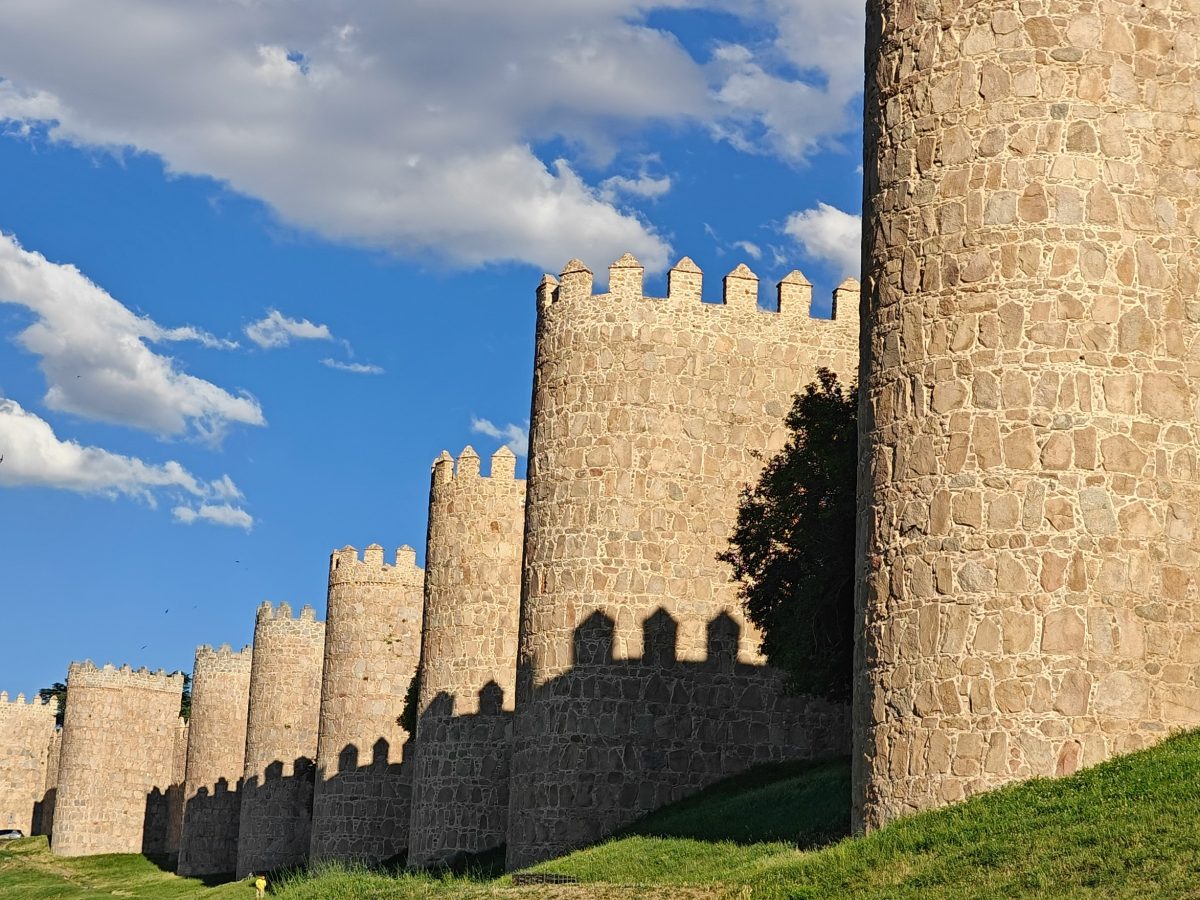
This is the starting day of our route. Ávila is one of the most striking cities on the Camino de Levante, thanks to its perfectly preserved medieval walls that encircle the old town. With 88 towers and 9 gates, these fortifications dominate the skyline and symbolize the city’s role as a frontier stronghold during the Middle Ages. Walking through its gates, we enter a historic center filled with Romanesque and Gothic monuments, quiet squares, and narrow streets that retain a timeless Castilian character.
The Cathedral of Ávila, partly built into the walls, is considered the first Gothic cathedral in Spain, while the Basilica of San Vicente stands out as a masterpiece of Romanesque architecture. Throughout the city, smaller churches, convents, and noble houses add to the sense of heritage and continuity with the past.
Ávila is also inseparably linked to Saint Teresa of Ávila, the Carmelite reformer and mystic who was born here. The Convent of Santa Teresa, built on the site of her birthplace, is one of several locations that connect visitors with her life and spiritual legacy, giving the city a profound religious significance for pilgrims.
For those walking the Camino, Ávila is more than just a cultural and spiritual milestone: it is also a place of rest. As a provincial capital, it offers full services and rich gastronomy, including specialties such as chuletón de Ávila and yemas de Santa Teresa. With its mix of history, faith, and hospitality, Ávila provides us with both inspiration and recovery before continuing our journey.
The stage from Ávila to Hernansancho leaves behind the dramatic mountain setting of the walled city and enters the wide, open plains of Castilla y León. The terrain is flat and exposed, with long stretches across cereal fields and pastures, offering little shade but expansive views of the surrounding plateau.
This section is quieter and less demanding than the mountainous approaches to Ávila, giving us a chance to recover while experiencing the solitude of the Castilian meseta. Villages along the way are small and rural, reflecting the traditional agricultural life of the region. Hernansancho, the destination, is a modest village with limited services but a calm and welcoming atmosphere.
*Once in Hernansancho, a transport service will take us to Ávila, where we'll stay to rest. The next morning, the service will return us to Hernansancho to continue the Camino from where we left off.
The stage from Hernansancho to Arévalo continues across the flat Castilian plateau, following rural paths and farm tracks through endless fields of wheat and barley. The walk is straightforward, with wide horizons and very little shade, offering a sense of solitude typical of the meseta. The landscape may seem repetitive, but it emphasizes the quiet rhythm of the Camino in this region.
The destination, Arévalo, is one of the most important towns along this stretch of the route. Known as the “city of Mudéjar,” it preserves remarkable examples of Mudéjar brickwork churches, as well as a medieval castle at the confluence of the Adaja and Arevalillo rivers. Its historic streets and squares provide a welcome contrast to the rural silence of the stage. Arévalo also offers full services for pilgrims, making it an excellent place to rest.
The stage from Arévalo to San Vicente del Palacio runs across the vast and flat plains of Castile, offering us an easy walk along farm tracks and rural roads. The landscape is dominated by cereal fields, open horizons, and the quiet rhythm of the meseta, where the solitude of the Camino is most strongly felt. Shade is scarce, but the wide skies and the silence of the countryside give this stretch a contemplative character.
The destination, San Vicente del Palacio, is a small rural village in Valladolid province. Though modest in size, it provides a peaceful stopover for us on the way to Medina del Campo. Its traditional Castilian character and calm atmosphere contrast with the larger, more historic towns before and after this stage.
*Once in San Vicente, a transport service will take us to Medina del Campo, where we'll stay to rest. The next morning, the service will return us to San Vicente to continue the Camino from where we left off.
The stage from San Vicente del Palacio to Nava del Rey is a short and straightforward walk across the flat plains of Valladolid. We follow rural paths and quiet roads through open farmland, with landscapes dominated by cereal fields and vineyards. The terrain is easy and unchanging, offering little shade but plenty of space for reflection in the solitude of the meseta.
The destination, Nava del Rey, is a larger town compared to the small villages of the previous stages. It has a long history and a strong tradition of wine-making, as it lies within the Rueda wine region. Its most notable monument is the Church of Los Santos Juanes, an impressive Renaissance-style building that dominates the skyline of the town. Nava del Rey provides more services for pilgrims, making it a practical and culturally interesting stop on the way to Medina del Campo.
The stage from Nava del Rey to Castronuño continues across the plains of Valladolid, following rural tracks through farmland and vineyards. The first part of the walk is flat and straightforward, with the wide horizons of the meseta accompanying us along the way. As the stage progresses, the landscape changes gradually when approaching the Duero River valley, where the terrain becomes more varied and green.
The destination, Castronuño, is a village overlooking the Duero River and the protected natural area of the Riberas de Castronuño-Vega del Duero. This is one of the most scenic sections of the route, with river landscapes, wetlands, and wooded banks that contrast with the open farmland of the meseta. Castronuño combines natural beauty with cultural heritage, offering us both rest and a pleasant change of scenery.
*Once in Castronuño, a transport service will take us to Toro, where we'll stay to rest. The next morning, the service will return us to Castronuño to continue the Camino from where we left off.
The stage from Castronuño to Toro follows the Duero River valley, offering a scenic transition from the small riverside village into the historic town of Toro. After leaving Castronuño, the path runs across farmland, vineyards, and gentle hills, often with views of the river and its fertile surroundings. The terrain is not difficult, but the stage is fairly long, with open stretches exposed to the sun.
The arrival in Toro is especially rewarding. Perched on a hill above the Duero, the town is rich in history and culture. Its skyline is dominated by the Collegiate Church of Santa María la Mayor, a Romanesque-Gothic masterpiece, and the Castle of Toro. Toro is also famous for its wines, produced from the local Tinta de Toro grape, and offers us a lively historic center with full services and cultural attractions.
The stage from Toro to Zamora follows the Duero River valley, offering a gentle and scenic route through vineyards, farmland, and occasional riverbanks. The terrain is mostly flat with well-marked paths, making this one of the easier stages on the Camino de Levante. We can enjoy expansive views of the Duero River and the surrounding landscape, which is historically linked to wine production and rural Castilian life.
To make this journey more manageable, there is the option to split it into two stages, with an overnight stay in Villalazán.
Zamora is a city rich in medieval heritage, famous for its Romanesque churches, fortified walls, and the Zamora Cathedral. Often called “the city of Romanesque art,” Zamora offers us a remarkable cultural experience. Its historic center, with narrow streets and ancient plazas, is compact and walkable, making it an ideal destination after several days of walking across the plains.
Zamora, located in the northwest of Spain along the Duero River, is a city renowned for its exceptional Romanesque architecture. Often referred to as “the city of Romanesque art,” it boasts one of the highest concentrations of Romanesque churches in Europe. Walking through Zamora’s historic center, we encounter narrow cobbled streets, charming plazas, and centuries-old buildings that reflect its medieval past.
The city’s fortifications and castle dominate the skyline, offering panoramic views of the river and surrounding plains. The Zamora Cathedral, with its distinctive Byzantine-style dome and impressive cloisters, is a central landmark and a symbol of the city’s religious and cultural heritage. Many of the smaller Romanesque churches, such as San Pedro, San Juan, and Santiago del Burgo, preserve original features and artworks, making the city a living museum of the Middle Ages.
Zamora also has a vibrant cultural life and culinary tradition. Its location in the fertile Duero valley supports local gastronomy, including specialties such as bacalao a la tranca (salted cod) and fine local wines from the Toro and Arribes regions. The city’s combination of history, architecture, and peaceful atmosphere makes it a memorable stop for us on the Camino de Levante.
The “from” price is for one traveler. When travelers share a room, the booking total is adjusted automatically.
| Travelers | Adjustment to booking total |
|---|---|
| 2 travelers sharing | −678,00€ from the booking total |

