More than 2 travelers? Ask for a group proposal.
The Camino de Santiago de Levante is a lesser-known but historically significant route that begins in Valencia and travels northwest across the heart of Spain to Santiago de Compostela.
The section from Toledo to Ávila takes us across the varied landscapes of central Spain, moving gradually from the fertile Tagus River valley into the wide Castilian plains and then towards the foothills of the Sierra de Gredos. It is a journey that combines historic towns, quiet villages, and natural contrasts, with stages that range from easy flat terrain to more demanding mountain crossings.
Photo of Greta Schölderle Möller on Unsplash
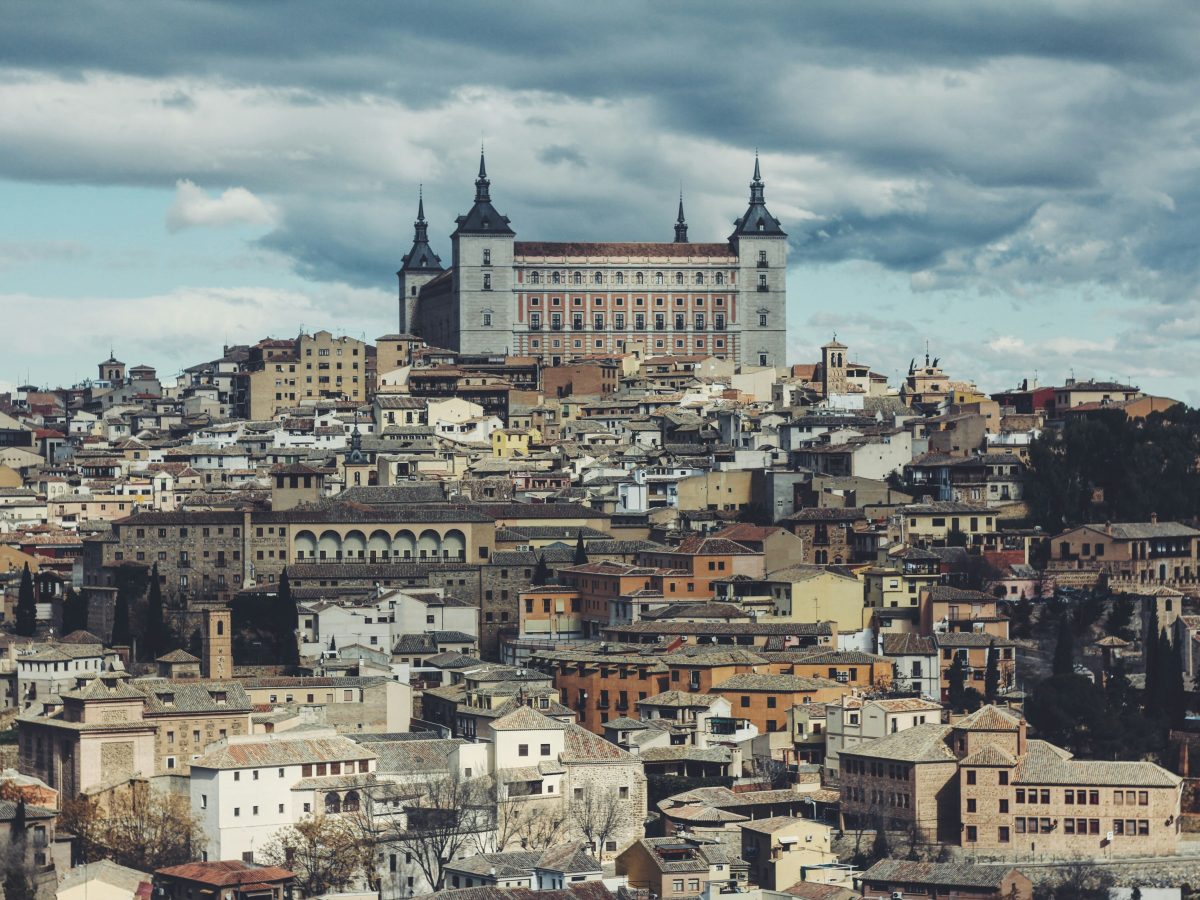
This is the starting day of our route. Toledo, located on a hill above the Tagus River, is one of Spain’s most historic and emblematic cities. Known as the “City of Three Cultures,” it reflects the coexistence of Christian, Jewish, and Muslim traditions throughout the Middle Ages. Its compact historic center, a UNESCO World Heritage Site, preserves an extraordinary mix of architectural styles, from medieval synagogues and mosques to Gothic and Renaissance churches.
The city’s most iconic landmark is the Toledo Cathedral, a masterpiece of Spanish Gothic architecture, housing an exceptional collection of art, including works by El Greco. Other highlights include the Alcázar, a fortress-palace that dominates the skyline; the Monastery of San Juan de los Reyes, built under the Catholic Monarchs; and the two historic synagogues, Santa María la Blanca and El Tránsito, which reflect Toledo’s Jewish heritage. Narrow winding streets, stone walls, and hidden courtyards add to the city’s timeless character.
Toledo is also deeply connected to El Greco, the Renaissance painter who lived and worked there, and whose presence is felt in several museums and churches. Beyond history and art, Toledo is known for its traditional crafts, such as Damascene metalwork, and its gastronomy, featuring dishes like marzipan, game meats, and stews. For pilgrims and visitors alike, Toledo offers a unique blend of spirituality, culture, and living history, making it one of the most significant cities along the Camino de Levante.
The stage from Toledo to Rielves is the first stretch of the Camino de Levante after leaving the monumental city of Toledo. We depart the Tajo River valley and gradually enter the open countryside of La Mancha and northern Toledo province. The terrain is mostly flat and follows rural tracks across farmland, with wide horizons and limited shade.
Although the landscapes are simple, the contrast with the bustling city of Toledo highlights the transition into the quiet rhythm of rural Castile. Small villages along the way reflect the agricultural character of the region. Rielves, the destination, is a modest town with basic services and a peaceful atmosphere, providing a practical stop before continuing westward.
*Once in Rielves, a transport service will take us to Torrijos, where we'll stay to rest. The next morning, the service will return us to Rielves to continue the Camino from where we left off.
The stage from Rielves to Maqueda continues across the flat agricultural plains of Toledo province. We walk along rural tracks and quiet secondary roads, with landscapes dominated by cereal fields, olive groves, and open horizons. The path is generally easy but exposed, with few natural shaded areas, so the walk can feel long under the sun.
The destination, Maqueda, is a small town with a remarkable medieval past. Its most striking landmark is the Castle of Maqueda, a fortress that once defended the old royal road to Extremadura. The castle, along with remains of walls and gates, evokes the town’s importance as a strategic point in central Spain.
*Once in Maqueda, a transport service will take us to Torrijos, where we'll stay to rest. The next morning, the service will return us to Maqueda to continue the Camino from where we left off.
The route runs across open countryside, following rural tracks and quiet roads, with fields of cereals, olive trees, and vineyards shaping the landscape. The walk is generally straightforward, though some stretches can feel long and monotonous due to lack of shade.
Arriving at Almorox, we enter a historic town with a strong rural identity and medieval heritage. Its parish church of San Cristóbal and the remains of old defensive walls reflect its past as a strategic settlement. Almorox is also surrounded by vineyards, contributing to its wine-making tradition. The village provides a quiet and authentic stop, with basic services available for pilgrims before tackling the following stages toward San Martín de Valdeiglesias.
The stage from Almorox to San Martín de Valdeiglesias marks the transition from the plains of Toledo into the foothills of the Sierra de Gredos. After leaving Almorox, the path leads through rural tracks bordered by olive groves, vineyards, and small patches of woodland. The terrain becomes more varied than in previous stages, with gentle slopes and occasional climbs, offering a noticeable change in landscape.
As we approach San Martín de Valdeiglesias, we enter a greener and more rugged environment, with pine and oak woods adding shade and variety. The town itself has a strong historical identity, centered around the Castle of Coracera, built in the 15th century and closely linked to the Catholic Monarchs. San Martín is also well-known for its wine-making tradition, giving us a taste of local culture and hospitality.
The stage from San Martín de Valdeiglesias to Cebreros marks the entry into the province of Ávila and brings us into more mountainous and scenic terrain. After leaving San Martín, the path heads towards the Picadas Reservoir and the Alberche River, one of the most attractive natural sections of this part of the Camino. The route then climbs gradually through wooded hills of pine and oak, offering shade and panoramic views of the surrounding valleys.
The destination, Cebreros, is a town with strong cultural traditions and historic character, well known for its wines. Its stone houses, narrow streets, and surrounding vineyards create a warm and authentic atmosphere, making it a rewarding stop after the climbs of the day.
The stage from Cebreros to Herradón de Pinares is one of the most challenging and scenic sections of the Camino de Levante, as it takes us deeper into the foothills of the Sierra de Gredos. After leaving Cebreros, the route climbs steadily through rugged countryside, passing through forests, rocky paths, and open highlands with wide views over valleys and distant peaks.
This stage requires stamina, as the continuous ascents and descents are more demanding than previous days, but the natural setting makes it highly rewarding. We experience a stronger sense of mountain walking, with a landscape that contrasts sharply with the plains of Toledo and Valladolid already left behind.
The destination, Herradón de Pinares, is a small mountain village with a peaceful atmosphere, offering a quiet and authentic resting place. Its rural character and proximity to the highlands of Ávila make it a good stop before the final approach to the walled city of Ávila.
*Once in Herradón, a transport service will take us to San Bartolomé de Pinares, where we'll stay to rest. The next morning, the service will return us to Herradón to continue the Camino from where we left off.
The stage from Herradón de Pinares to Ávila is a demanding but rewarding section that crosses the Sierra de la Paramera before descending into the monumental city of Ávila. The route begins with steady climbs through rugged mountain terrain, with rocky tracks, scrubland, and occasional pine groves. Panoramic views across the Castilian plateau and surrounding valleys accompany much of the walk, creating a strong sense of wilderness.
After crossing the highlands, we begin the descent towards Ávila, where the landscape gradually opens into wide plains. The arrival is one of the highlights of the Camino de Levante: the sight of Ávila’s medieval walls, perfectly preserved with their towers and gates, offers a dramatic and unforgettable welcome. The city, closely linked to Saint Teresa of Ávila, combines cultural heritage, spiritual significance, and excellent services, making it an ideal place for rest and exploration.
Ávila, set on the high Castilian plateau, is one of Spain’s most iconic medieval cities and a UNESCO World Heritage Site. It is best known for its imposing city walls, among the best-preserved in Europe, which encircle the old town with 88 towers and 9 gates. The walls not only define Ávila’s skyline but also symbolize its long history as a strategic frontier city during the Middle Ages.
Within the walls, Ávila preserves a remarkable collection of Romanesque and Gothic churches, convents, and noble houses. The Ávila Cathedral, partly integrated into the fortifications, is considered one of the earliest Gothic cathedrals in Spain. Other landmarks include the Basilica of San Vicente, a masterpiece of Romanesque art, and numerous monasteries linked to the city’s strong spiritual tradition.
Ávila is inseparably connected with Saint Teresa of Ávila, the great mystic, writer, and reformer of the Carmelite order. We can explore sites associated with her life, such as the Convent of Santa Teresa, which stands on the site of her birthplace. This spiritual dimension adds depth to the city’s cultural and architectural appeal.
Beyond its monuments, Ávila offers the atmosphere of a Castilian town, with quiet streets, traditional cuisine—famous for chuletón de Ávila (steak) and yemas de Santa Teresa (sweet egg yolks)—and panoramic views over the surrounding plains and mountains. For us on the Camino de Levante, arriving in Ávila is both a physical and spiritual milestone, combining history, heritage, and devotion.
The “from” price is for one traveler. When travelers share a room, the booking total is adjusted automatically.
| Travelers | Adjustment to booking total |
|---|---|
| 2 travelers sharing | −528,00€ from the booking total |

