More than 2 travelers? Ask for a group proposal.
The Vía de la Plata, also known as the Silver Way, is an ancient Roman road that linked the southern and northern regions of the Iberian Peninsula. The route follows a northwest-southeast path, passing through some of the most significant historical and cultural landscapes of Andalusia and Extremadura. Along the way, we encounter remnants of Roman architecture, including bridges, forts, and settlements, highlighting the road’s strategic importance in connecting the Roman provinces.
Today, the Vía de la Plata is a popular route for pilgrims walking the Camino de Santiago, attracting visitors who are interested in both its historical significance and natural beauty. The entire stretch offers a fascinating glimpse into Spain’s Roman past while also providing a scenic journey through the countryside.
Photo of Tânia Mousinho on Unsplash
This is the starting day of our route. Seville, the capital of Andalusia in southern Spain, is one of the country’s most vibrant and historically rich cities. Known for its blend of Moorish, Gothic, and Renaissance architecture, Seville’s most iconic landmarks include the Seville Cathedral, one of the largest Gothic cathedrals in the world, and the Giralda Tower, originally a minaret from the city’s Islamic past. Nearby stands the Real Alcázar, a magnificent royal palace renowned for its intricate Mudéjar design and beautiful gardens. The Barrio de Santa Cruz, with its narrow, winding streets and whitewashed houses, captures the city’s old-world charm and is perfect for exploring on foot.
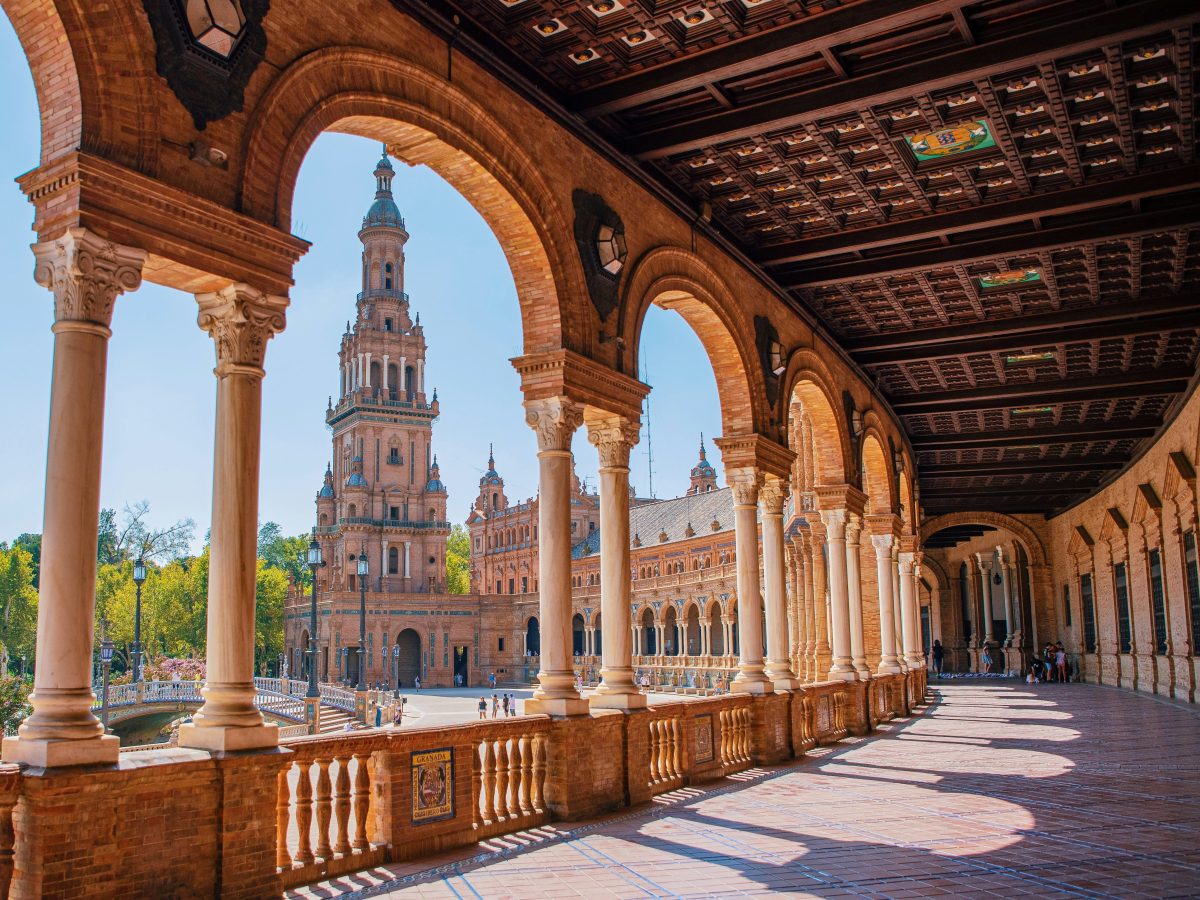
Beyond its monuments, Seville is also a cultural powerhouse famous for flamenco, tapas, and lively festivals such as the Feria de Abril and Semana Santa (Holy Week). We can stroll along the Plaza de España, an impressive square built for the 1929 Ibero-American Exposition, or enjoy a relaxing walk by the Guadalquivir River. The city’s warm climate, vibrant nightlife, and rich traditions make it one of Spain’s most captivating destinations, offering a perfect mix of history, culture, and modern Andalusian life.
The stage begins with the taxi ride from Seville to Santiponce. Then, the route follows the Guadalquivir River, offering us a scenic view of the surrounding countryside, with olive groves, rolling hills, and the occasional rustic village. The road connects a series of important Roman settlements, serving as a vital communication and trade route during the Roman Empire.
From Seville to Guillena it is a popular stretch for those walking the Camino de Santiago. The terrain is relatively flat and accessible, making it an easy route for pilgrims. Guillena itself is a charming town that provides a peaceful contrast to the bustling city of Seville, with its whitewashed houses, local markets, and historical landmarks that reflect its deep ties to the region's Roman past.
Starting in Guillena, we can see the Iglesia de Nuestra Señora de la Granada, a charming church with historical significance. The route then moves through open fields and forests, providing a serene and peaceful atmosphere, with occasional views of the Sierra Norte mountains. While walking, it’s possible to spot ancient Roman milestones and ruins along the way, reminding us of the road's historical importance.
As we near Castilblanco de los Arroyos, the town’s whitewashed houses and narrow streets offer a typical Andalusian village experience, perfect for a break. When it comes to food, this region of Andalusia is famous for its jamón ibérico (Iberian ham), aceitunas (olives), and gazpacho (cold tomato soup), all of which can be enjoyed at local taverns. The "tapas" culture is very much alive here, where small plates of food are shared among friends or fellow pilgrims.
The stretch from Castilblanco de los Arroyos to Almadén de la Plata takes us deeper into the heart of the Sierra Norte de Sevilla. Along the way, we can enjoy the beautiful natural surroundings, including forests of cork oaks and Mediterranean shrubs. As we approach Almadén de la Plata, the path meanders through small villages and agricultural land, where traces of Roman heritage can still be found, such as ancient stone markers and remnants of old roads.
Almadén de la Plata is a charming mountain village that provides a glimpse into Andalusia's rural life. The town is known for its historical mining past, especially related to mercury extraction, which has shaped much of its history. The town’s Iglesia de Nuestra Señora de Gracia, with its whitewashed walls and quaint bell tower, is worth a visit. The combination of history, natural beauty, and delicious local cuisine makes the journey from Castilblanco de los Arroyos to Almadén de la Plata a highlight of the Vía de la Plata.
The section between Almadén de la Plata and El Real de la Jara is rich in natural beauty and cultural heritage. Starting in Almadén de la Plata, a charming town known for its mining history, we can explore the surrounding Sierra Morena Natural Park, home to dense forests, wildlife, and scenic trails. Continuing towards El Real de la Jara, we can enjoy the peaceful rural landscapes, dotted with whitewashed villages and olive groves.
Gastronomically, this route offers an authentic taste of Andalusia’s culinary traditions. In Almadén de la Plata, we can savor local dishes like aji picante (a spicy pork stew) and migas (fried breadcrumbs with chorizo), often accompanied by a glass of local wine or sangría. As we approach El Real de la Jara, the gastronomy leans more towards hearty mountain fare, with specialties such as venado (venison) and presa ibérica (Iberian pork), served with a side of patatas a lo pobre (simple fried potatoes). The region’s rural atmosphere makes it an ideal place to enjoy fresh, rustic meals that reflect the essence of Andalusian cuisine.
The stretch from El Real de la Jara to Monesterio crosses the border between Andalusia and Extremadura, offering a blend of natural beauty and historical charm. Starting in El Real de la Jara, we can explore the impressive medieval castle that overlooks the town, a reminder of its strategic past on the frontier between Christian and Muslim territories. As we head north, the path winds through rolling hills, oak forests, and pastures dotted with grazing Iberian pigs — a landscape typical of the dehesa ecosystem. This tranquil and picturesque route provides perfect conditions for us to enjoy the peaceful countryside before reaching Monesterio, a town known for its deep-rooted traditions and warm hospitality.
In terms of gastronomy, this section of the route is a true delight for lovers of cured meats. Monesterio is renowned for its jamón ibérico de bellota, considered among the finest in Spain, and the town even hosts a Museum of Iberian Ham (Museo del Jamón Ibérico) celebrating this culinary treasure. We can also enjoy other local specialties such as caldereta de cordero (lamb stew), morcilla (blood sausage), and gazpacho extremeño, all paired with local wines or fresh bread from traditional bakeries.
The Vía de la Plata from Monesterio to Fuente de Cantos takes us through the peaceful countryside of northern Extremadura, offering stunning natural landscapes and a rich history. As we leave Monesterio, the route passes through expansive dehesa pastures, dotted with cork oaks and grazing livestock, before gradually heading towards Fuente de Cantos. The area is characterized by rolling hills, open fields, and small rural settlements.
The town of Fuente de Cantos, nestled in this serene setting, is historically significant as the birthplace of the celebrated Baroque painter Francisco de Zurbarán, and it boasts several landmarks dedicated to his life and work, including the Zurbarán House-Museum.
Along the way, the region’s cultural heritage is evident in its ancient churches, traditional architecture, and well-preserved rural villages. Fuente de Cantos itself offers a charming town center with whitewashed houses and cobblestone streets, where we can admire local craftsmanship and the slower pace of life in this part of Extremadura.
The stretch from Fuente de Cantos to Zafra offers a journey through the serene landscapes of southern Extremadura, marked by rolling dehesas, olive groves, and cork oaks. Along the way, small chapels and traditional farmhouses punctuate the route, giving us a sense of the region’s deep historical and agricultural roots.
Upon reaching Zafra, often called “Little Seville” for its charming architecture, we will find a beautifully preserved old town, with highlights like the Alcázar-Palace of the Dukes of Feria, the Plaza Grande and Plaza Chica, and the Collegiate Church of La Candelaria. Zafra’s welcoming taverns and traditional inns provide the perfect ending to this section of the historic route.
The route from Zafra to Villafranca de los Barros continues through the heart of Extremadura's agricultural landscape, filled with vineyards, olive orchards, and gently undulating hills. As we leave Zafra, we will pass through charming villages where the rural architecture and peaceful atmosphere offer a glimpse into traditional life. Along the way, the fields are dotted with small chapels and roadside crosses, offering quiet moments for reflection and connection to the region’s spiritual history.
In Villafranca de los Barros, a town renowned for its wine production, the highlights include the Church of Nuestra Señora del Valle, a beautiful example of local religious architecture. This area is famous for its extremeña wines, particularly Tempranillo and Bobal varieties, and tapas such as tortas de aceite (olive oil pastries) and jamón ibérico. Villafranca’s welcoming environment makes it a perfect place to stop and savor the regional cuisine, paired with a glass of local wine.
The stretch from Villafranca de los Barros to Almendralejo takes us deeper into the heart of Extremadura’s wine country, with vineyards stretching across the landscape. The area is rich in agricultural tradition, particularly the production of sherry-like wines, and the route offers glimpses of rural life, with fields of wheat and sunflowers.
Arriving in Almendralejo, a lively town known for its wine and Iberian ham, we will find a mix of modern and traditional architecture. Notable sites include the Museum of Wine, which offers insight into the region’s winemaking history, and the Church of Nuestra Señora de la Purificación, a charming example of local religious architecture. Almendralejo is also known for its rich gastronomy, particularly tapas. The town’s wineries invite us to taste local wines, which pair perfectly with the region’s Iberian cured meats and artisanal cheeses.
The path from Almendralejo to Mérida is a peaceful one, leading through small towns where we can experience traditional farming life and quiet, scenic landscapes. The route offers picturesque views of the countryside and glimpses of the Roman heritage that will become more prominent as we approach Mérida.
Upon reaching Mérida, one of the most significant Roman cities in Spain, we are greeted by an impressive array of ancient monuments which speak to the city’s rich history as a major Roman settlement. Mérida is also known for its exceptional gastronomy, where cured meats, lamb stew, and cabrillas (snails) feature prominently. Don’t miss trying “caldereta de cordero”, a regional lamb stew, paired with local wines from the nearby vineyards. Mérida’s charming streets and vibrant food culture make it an essential stop on the Via de la Plata.
Mérida, the ancient Roman capital of Lusitania, is one of Spain’s most important archaeological cities and a UNESCO World Heritage Site. Its standout monument is the Roman Theatre, remarkably preserved and still used today for performances. Next to it lies the Amphitheatre, once the site of gladiator fights, and the National Museum of Roman Art, which showcases mosaics, sculptures, and artifacts from the Roman era. Also unmissable is the Temple of Diana, a majestic Roman temple right in the city center, and the Arch of Trajan, part of the original city forum.
Beyond the core monuments, Mérida is rich in Roman infrastructure. The Puente Romano, one of the longest surviving Roman bridges in the world, still spans the Guadiana River. We can also visit the Casa del Mitreo, a Roman villa with impressive mosaics, and the Alcazaba, a Moorish fortress built using Roman foundations. Together, these sites make Mérida a unique blend of Roman grandeur and later historical layers.
The “from” price is for one traveler. When travelers share a room, the booking total is adjusted automatically.
| Travelers | Adjustment to booking total |
|---|---|
| 2 travelers sharing | −726,00€ from the booking total |


