More than 2 travelers? Ask for a group proposal.
The Camino Primitivo is one of the oldest and most historically significant routes of the Camino de Santiago, starting from Oviedo and leading to Lugo. This route was originally traveled by King Alfonso II of Asturias in the 9th century, marking it as the first official Camino to Santiago. The Camino Primitivo stands out for its rugged terrain, offering a more challenging and less commercialized experience compared to other routes. Pilgrims walking this path are treated to breathtaking natural landscapes, from the green hills of Asturias to the lush forests of Galicia, with an abundance of rustic villages and medieval towns along the way.
Photo of Alberto Gasco on Unsplash
Oviedo, the capital of Asturias in northern Spain, is a city rich in history, culture, and natural beauty. The Camino Primitivo begins in Oviedo at the Catedral de San Salvador, a key landmark in the city and a significant point for pilgrims. In addition, there are several must-see attractions to explore.
Start with Oviedo's Old Town, a charming area filled with narrow streets, medieval architecture, and historical sites. Key places include the Catedral de San Salvador, a magnificent Gothic cathedral that houses important religious relics, and the Plaza del Fontán, a picturesque square lined with traditional houses and vibrant markets.
Another highlight of Oviedo is its Pre-Romanesque Churches, such as Santa María del Naranco and San Miguel de Lillo, located on the slopes of Mount Naranco. These UNESCO-listed sites, built in the 9th century, are among the best examples of early medieval architecture in Spain.
Finally, we can not miss the food scene. Oviedo is known for its sidra (Asturian cider), which we can sample in one of the many cider bars. Try some traditional dishes like fabada asturiana (a rich bean stew) or cachopo (breaded veal steak).
Whether we are walking through its historical streets, exploring ancient churches, or enjoying the natural beauty, Oviedo offers a delightful mix of experiences for us.
Starting from the Catedral de San Salvador in Oviedo, the route leads us through the charming streets of the city before heading out into the picturesque Asturian countryside.
The first part of the journey involves ascending the Monte Naranco, where we are treated to stunning views of Oviedo and the surrounding area. As we leave the city behind, the path takes us through lush forests and rolling hills, with small rural villages along the way. The peaceful atmosphere and natural beauty of the landscape make this section of the Camino Primitivo particularly enjoyable, although the terrain can be challenging with some steep ascents and descents.
The town of Grado, our destination for the day, is a traditional Asturian village that marks a notable stop on the Camino. Grado has a rich history, with an old town center that features historic buildings, charming plazas, and local restaurants offering delicious Asturian cuisine. The Plaza Mayor, the main square, is surrounded by picturesque buildings and is a great place to relax and enjoy the atmosphere of this quiet town. Nearby, we will find the Church of San Pedro, a beautiful example of Asturian religious architecture with its Romanesque and Gothic elements.
Overall, Grado combines the charm of a traditional Asturian town with access to both cultural and natural treasures, making it a delightful stop in our way.
The Camino Primitivo from Grado to Salas is a scenic and historically rich section of the pilgrimage route. This stretch of the Camino takes us through the lush landscapes of Asturias, offering a peaceful and relatively quiet journey through rural villages and rolling hills.
The route begins by leaving Grado behind and heading into the surrounding countryside, where the path is mostly composed of rural roads, forests, and pastures. Along the way, we will pass through small hamlets like Cornellana, where we can find the Monastery of San Salvador de Cornellana, a beautiful example of medieval architecture. The monastery is a peaceful spot and a significant landmark along the Camino Primitivo, providing a glimpse into the region’s rich religious history.
As we continue the journey, we will walk through more serene landscapes, crossing streams and small rivers while encountering occasional uphill and downhill stretches. The terrain can be challenging, but the views of the verdant hills and the occasional glimpse of distant mountain ranges make it all the more rewarding.
Finally, the route leads to Salas, a historic town with an impressive medieval heritage. Notable landmarks include the 16th-century Collegiate Church of Santa María la Mayor, home to the tomb of Valdés Salas; the 14th-century Medieval Tower, which houses the Pre-Romanesque Museum of San Martín; and the 16th-century Valdés-Salas Palace.
For those interested in local culture, Salas also offers a glimpse into traditional Asturian rural life. The town's picturesque streets, with their traditional stone houses and charming plazas, invite leisurely strolls, and we will find small shops selling local products, including artisan cheeses and cider. Salas is famous for its traditional sweets Carajitos del Profesor, the Afuega’l Pitu cheese, and its fresh produce.
The journey begins in Salas, leaving the town and heading into the surrounding countryside. The route quickly transitions into rural roads and wooded paths, with gentle ascents and descents along the way.
The route continues through the rolling hills and green pastures typical of Asturias, offering breathtaking views of the surrounding valleys and mountains. We can enjoy a peaceful, immersive experience in nature as we make our way toward Tineo.
Upon reaching Tineo, we are welcomed by a town rich in history and culture. Tineo is a historic stopping point on the Camino Primitivo, known for its medieval architecture and stunning views of the surrounding landscape. Key attractions include the Church of San Pedro, a beautiful Romanesque church, and the Palacio de los García de Tineo, a notable building that showcases the town's aristocratic past.
Tineo is also known for its cider culture, which is an integral part of the town’s identity. Asturias, including Tineo, is famous for its sidra (cider), and the town hosts various cider festivals, where locals and visitors gather to celebrate and taste the region’s famous beverage. Tineo’s cider houses offer a unique experience, where we can watch the traditional method of pouring cider from a height, known as "escanciado", which is believed to enhance the flavor.
Tineo, with its mixture of legend, culture, and natural beauty, offers a fascinating glimpse into the heart of Asturias.
The Camino Primitivo from Tineo to Pola de Allande is a beautiful section of the pilgrimage route offering a mix of rural landscapes, peaceful countryside, and small villages. This stretch is known for its challenging terrain and rewarding natural beauty, making it a memorable part of the journey to Santiago de Compostela.
Starting from Tineo, we leave the town and quickly enter the lush Asturian countryside. The route begins with an ascent into the mountains, passing through forests and rolling hills typical of the region. The path is mostly composed of rural roads and trails, with some steep climbs and descents.
As we approach Pola de Allande, the final destination of this leg, the landscape becomes gentler, with more open fields and gentle slopes. Pola de Allande is a small town located in the Valle del Río Nisón, a picturesque valley with a calm and inviting atmosphere. The town is known for its traditional architecture and its role as a key stop for pilgrims on their way to Santiago. While in Pola de Allande, we can visit the Church of San Andrés, a beautiful Gothic church that dates back to the 16th century.
For visitors interested in local cuisine, Pola de Allande offers the opportunity to sample some of the best traditional Asturian dishes, such as fabada asturiana (a rich bean stew) and, of course, sidra (Asturian cider). The area is known for its food culture, and there are several cider houses and restaurants where we can enjoy these regional specialties.
The journey from Pola de Allande to Berducedo is a challenging yet rewarding stretch of the pilgrimage route. This section takes us through the rugged, mountainous landscapes of Asturias, offering breathtaking views and a deep sense of solitude and connection with nature.
Starting from Pola de Allande, the route quickly ascends gradually making its way into the surrounding hills and forests. As we leave the town behind, we begin a steady climb through dense woodlands, crossing streams and small rivers along the way. The terrain is quite varied, with some steep inclines and rocky paths, making this section one of the more physically demanding parts of the Camino Primitivo.
As we continue the descent, we will pass through small rural settlements such as Berducedo, our destination for the day. Berducedo is a small, picturesque village that offers a quiet and peaceful atmosphere. Nestled in the mountains, it is surrounded by lush green fields, forests, and traditional stone houses. Though small, the village has a charming and authentic feel, with a few local establishments where we can rest and enjoy traditional Asturian food and cider.
The stunning natural landscapes, the quiet solitude, and the sense of stepping into a remote, unspoiled part of Asturias make this section of the Camino Primitivo an unforgettable experience for us on our way to Santiago de Compostela.
Leaving Berducedo, the route takes us along narrow mountain trails, winding through forests of oak and pine trees. The climb can be strenuous, but the breathtaking panoramic views of the surrounding valleys and peaks are a rewarding payoff for those who make the effort. The fresh mountain air and peaceful surroundings create a serene atmosphere, perfect for reflection and contemplation.
As the route continues, we descend into the Valle de Salime, heading toward the village of Grandas de Salime, located near the Embalse de Salime, a large reservoir surrounded by lush hills and mountains. The descent through the valley is more gradual, with pleasant views of the reservoir, the Navia River and the surrounding green hillsides.
Grandas de Salime is a small, quiet village with a few local amenities for us to rest and recharge. One of the most notable attractions in the town is the Ethnographic Museum of Grandas de Salime (Museo Etnográfico de Grandas de Salime). This museum is dedicated to preserving and showcasing the traditional rural life of the Asturias region. Visitors can explore exhibits about the local culture, including the history of farming, artisan crafts, and the way of life in the region over the centuries. The museum is a great way to learn about the local traditions and the daily lives of past generations in Asturias.
The area surrounding Grandas de Salime is known for its natural beauty, with the Salime Reservoir being a prominent feature. It offers a serene setting for a peaceful stop along the Camino Primitivo, allowing us to reflect on our journey before continuing on the path to Santiago de Compostela.
Starting from Grandas de Salime, the path leads through the scenic countryside of Asturias, gradually climbing up into the mountains. The early part of the route takes us through dense forests, offering a peaceful and serene atmosphere, with views of the surrounding hills and valleys. The trail follows a mix of dirt tracks, country lanes, and forest paths.
As the route ascends, we will pass through various rural hamlets, where the quiet pace of life and the traditional way of living are still evident. The terrain can be tough, with steep inclines that require good physical preparation. However, the effort is well worth it, as the views from higher altitudes are spectacular, providing sweeping panoramas of the nearby mountains and the lush green valleys below.
After crossing into the province of Lugo, the path continues towards Fonsagrada, a small but important town in Galicia. This final part of the journey involves a descent into the town, where we can rest and resupply before continuing on our pilgrimage towards Santiago.
Fonsagrada itself is known for its historical significance and its role as a staging point for pilgrims on their way to Santiago. The town’s church, the Iglesia de Santa María, is an important stop for us, and it offers a peaceful place to reflect after a long day of walking. The church is simple yet charming, with a typical Galician architectural style. It also has an important role in the religious and cultural heritage of Fonsagrada, with a history that dates back several centuries.
Walking through the town, we will also be able to appreciate the traditional Galician rural architecture. The town is known for its charming stone houses with slate roofs, which are typical of the region. Fonsagrada maintains a strong sense of local culture, and its streets are lined with quaint cafés, shops, and small restaurants where we can enjoy regional dishes such as lacón con grelos (pork with turnip greens) or empanada gallega (Galician pie). The slower pace of life in Fonsagrada allows us to experience the authentic rural lifestyle of Galicia before continuing our path.
The route from Fonsagrada to Cádavo Baleira is a beautiful and relatively quiet stretch of the Camino Primitivo, offering us a chance to experience the heart of rural Galicia. The path features both physical challenges and rewards, with varied terrain, scenic vistas, and a profound sense of tranquility. While the stretch can be demanding due to its elevation changes and sometimes muddy paths, the natural beauty and rural charm of the region make it a memorable and fulfilling part of the Camino.
Starting from Fonsagrada, the path soon leads us out of the town and into the surrounding forests and hills. The early part of the journey is marked by gentle ascents, as the route climbs higher into the mountains of Galicia, passing through traditional Galician villages and rural hamlets. As the path rises, the landscape opens up, offering beautiful views of the surrounding forests and farmlands. The quietude of the region is palpable, providing a peaceful and reflective atmosphere for us.
As we approach Cádavo Baleira, the terrain starts to flatten out somewhat, and the path becomes easier to navigate. This small village, located in the municipality of Baleira, marks a quiet, rural stop on the Camino.
Although Cádavo Baleira is a small settlement, it is home to a few essential services for us, such as cafés and small shops where we can enjoy a meal or pick up supplies.
The final stretch from Cádavo Baleira to Lugo offers us an immersive journey through some of the most scenic and historically rich landscapes of Galicia. With its serene countryside, charming rural villages, and the fascinating city of Lugo at the end of the route, this section of the Camino is a memorable and rewarding experience for those walking in the footsteps of centuries of pilgrims.
As we leave Cádavo Baleira, the path takes us through the lush forests and rolling hills of rural Galicia. The route is characterized by its serene atmosphere, as we walk through small villages, past stone farmhouses, and along quiet country roads. The trail offers stunning views of the surrounding hills, valleys, and the characteristic Galician greenery. The journey is peaceful and reflective, with only the occasional sound of birds and distant cattle to accompany us.
As we approach Lugo, the landscape gradually transitions from rural tranquility to the urban surroundings of the city. Lugo is one of the most important milestones on the Camino Primitivo and an essential stop for pilgrims. The city is renowned for its Roman walls, which are among the best-preserved in Europe and have been recognized as a UNESCO World Heritage site. The old town of Lugo is a charming blend of Roman, medieval, and modern architecture, making it a wonderful place to explore once we have completed the day's walk.
Upon entering Lugo, we will find a sense of accomplishment, as the city marks an important point on the Camino.
This is the final day of our stage. Lugo, a historic city in Galicia, is a treasure trove of cultural, architectural, and natural attractions. As one of the oldest cities in the region, Lugo offers a unique blend of Roman heritage, medieval charm, and Galician traditions. It is highly recommended to spend at least a full day here to discover some of the key sights and experiences we should not miss when visiting Lugo.
One of the most iconic landmarks in the city is the Roman Walls of Lugo, a UNESCO World Heritage Site. These walls, built in the 3rd century AD, are remarkably well-preserved and encircle the historic city center. Stretching over 2 kilometers, they are the best-preserved Roman military fortifications in Europe. We can walk along the top of the walls, offering spectacular views of the city and the surrounding landscape.
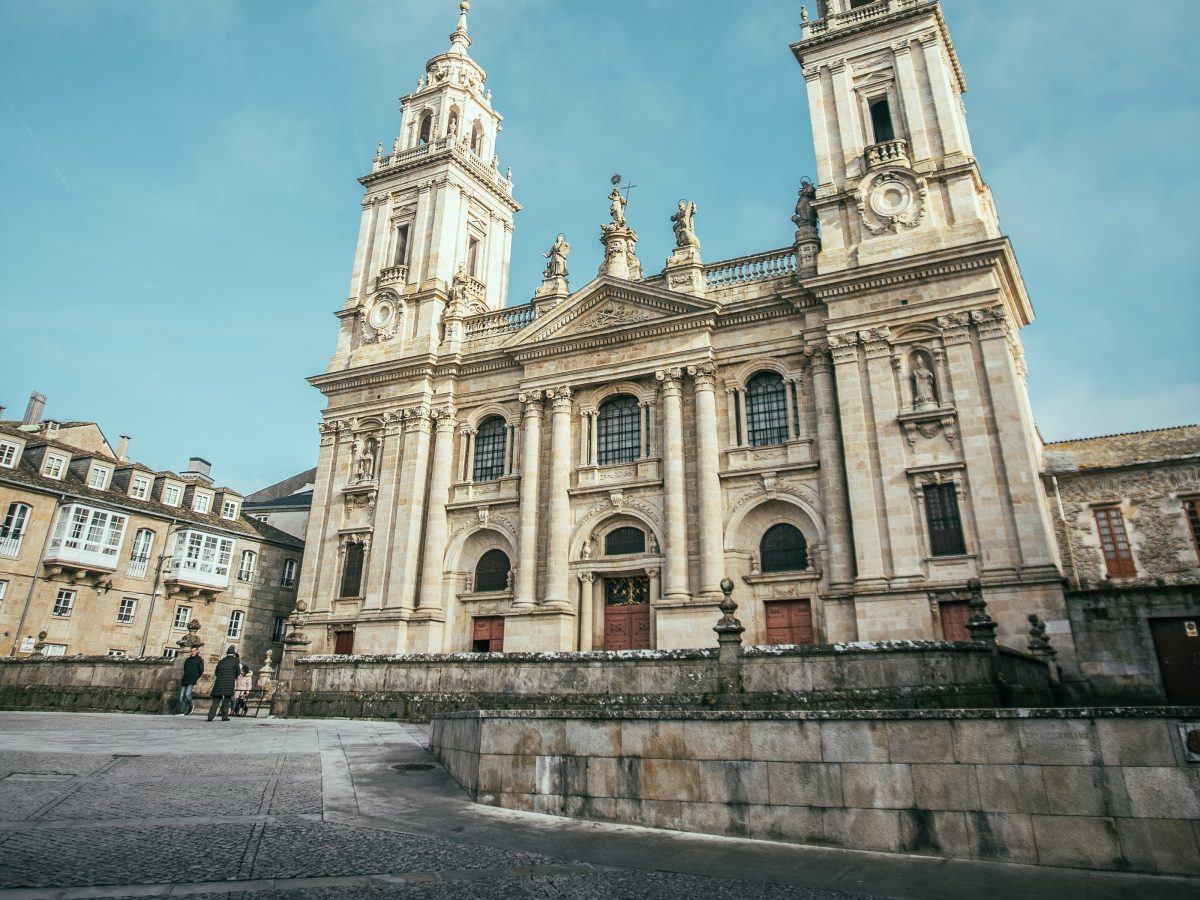
The Lugo Cathedral, also known as the Cathedral of Santa María, is a must-visit for anyone interested in the city’s religious and architectural history. Located in the heart of the old town, this impressive structure dates back to the 12th century, although it was modified over time, blending Romanesque, Gothic, and Baroque styles. The interior is equally stunning, with beautiful chapels, intricate woodwork, and a fascinating Romanesque crypt.
The Praza Maior is the central square of Lugo, a lively and historic area that serves as the heart of the city. Surrounded by charming arcades and traditional Galician buildings, the square is the perfect place to relax and soak in the atmosphere of Lugo. The square is often bustling with local markets, events, and festivals. It is a great spot to sit on a terrace and enjoy a coffee or a glass of wine, while watching daily life unfold. The square is also home to the Town Hall (Casa Consistorial), an impressive building with a striking facade.
The Museo Provincial de Lugo is a must for history and art enthusiasts. Located near the city center, the museum showcases a wide range of exhibits, from prehistoric and Roman artifacts to contemporary art.
For those looking to experience Lugo’s green spaces, Parque Rosalia de Castro is an ideal place to unwind. This large park, located just outside the city center, is named after the famous Galician poet Rosalia de Castro.
For a more immersive experience in Lugo’s Roman history, the Termas Romanas (Roman Baths) offer a fascinating glimpse into ancient Roman leisure and wellness culture. These well-preserved Roman baths are located in the heart of the old town, and we can explore the ruins of the bathhouse, where Romans would have relaxed in hot and cold baths.
Another historical gem is the Plaza de Santa María, a charming square that offers a picturesque view of the Lugo Cathedral and its surroundings. The square is lined with traditional Galician buildings, creating a lovely atmosphere. Nearby, the Roman Bridge (Puente Romano) crosses the Miño River, linking the old town to the more modern parts of the city.
Moreover, Lugo is known for its exceptional Galician cuisine, and a visit would not be complete without sampling the local dishes. One of the city’s signature dishes is lacón con grelos, a traditional Galician stew made with salted pork shoulder, turnip greens, and potatoes. Lugo is also renowned for its pulpo a la gallega (octopus), often served with paprika, olive oil, and coarse sea salt. Pair our meal with a glass of albariño or a local mencía wine to complete the experience.
Lugo certainly offers a memorable experience that connects us with both its past and present.
The “from” price is for one traveler. When travelers share a room, the booking total is adjusted automatically.
| Travelers | Adjustment to booking total |
|---|---|
| 2 travelers sharing | −816,00€ from the booking total |

